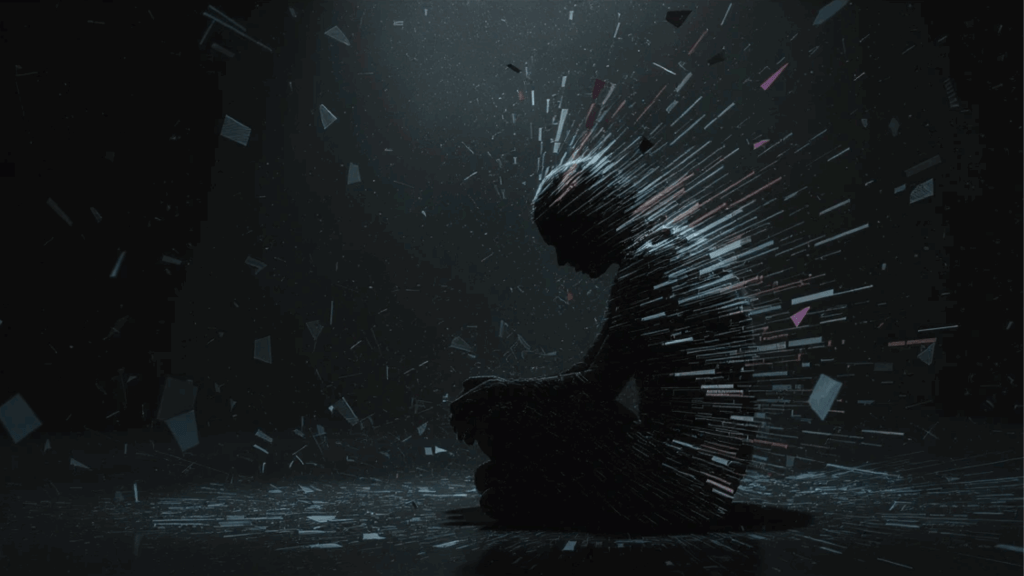
We Don’t Talk About That | JBE Mindful Pathways
🎧 Prefer to listen instead? Press play below to hear this piece in audio format.
Everybody loves the “strong one.” They clap for you, they lean on you, they brag about how you’ve always got it together. But let me tell you the truth: the stronger ones? We’re not really strong. We’re just survivors who learned how to fake it. We learned to swallow our breakdowns, to cry in silence, to hold everybody else’s weight while no one even notices ours. And after a while, people stop calling. They stop checking in. Because hey, you’re strong, you’re good, you don’t need help, right?
Wrong. Being the strong one is fucking lonely. It’s heavy. And it’s exhausting pretending that the shit doesn’t hurt just because the world expects you to carry it like a pro.
You know what’s wild? People see you surviving and they confuse it for thriving. They think strength is your personality, when in reality it’s your survival costume. You ever thought about that? How many times did you plaster on a smile while your insides were cracking just so people wouldn’t ask, “are you okay?” Because let’s be real, half the time they don’t even fucking care about the answer — they just want to feel good about asking.
And let me ask you this: when was the last time somebody checked on you without needing something? When was the last time somebody texted you just to say, “I know you’re strong, but you don’t have to be today”?
I’ll wait.
See, that’s the thing. Being “the strong one” turns into this silent contract you never signed. You become the rock, the glue, the backbone. But rocks crack, glue dries out, and backbones break. Nobody wants to talk about that part. Nobody wants to admit that the strong one is usually the loneliest person in the damn room.
In the Family
Let’s start with the family, because that’s where most of this shit begins, isn’t it? You don’t wake up one day at thirty or forty saying, “I’ll be the strong one.” Nah, that title gets handed to you way before you even know what the fuck to do with it. Sometimes it’s the oldest child, the one who gets parentified before they’re even done being a kid themselves. You know that role? You’re eight years old but you’re making dinner, cleaning up, raising your siblings because your parents are too tired, too absent, or too broken to show up. That’s when the contract gets slipped under your door: congratulations, you’re the strong one now. No, you don’t get to sign it. It’s already signed in your blood.
And then there’s the youngest, right? People don’t talk about that one enough. The youngest gets bullied or overlooked, and suddenly they’ve got to armor up just to make it through. “Stop crying, toughen up, you’re too sensitive.” So they build that strength shell, but inside? They’re just trying to survive the noise of being the punching bag. And people clap later like, “Wow, you’re so resilient.” Yeah, resilient because I had no choice but to harden up while nobody gave a damn about my bruises.
Only children? Don’t think they get off easy either. Isolation is a hell of a teacher. When there’s nobody else to lean on, you learn to carry your own weight — and then some. You learn that no one’s coming, so you better figure it out. Independence becomes your armor, and before long, people call you “strong” when really you just know what loneliness tastes like from the inside out.
And here’s the kicker — sometimes that “strong one” shit doesn’t even stop at childhood. It gets passed down, like a family heirloom nobody wants but everyone keeps handing off. You ever think about that? I do. I pretended to be the strong one in every relationship I had, because I thought if I didn’t hold it all together, the whole damn house of cards would collapse. No home, no food, no stability for my kids. That wasn’t strength, that was survival dressed up in nice clothes. But here’s the ugly truth: when you keep pretending long enough, it bleeds into your kids too.
Now I see my children — my oldest, even my youngest — stepping into relationships where they’re automatically the “understanding one,” the “bigger person.” They’re carrying patience they shouldn’t have to carry, taking on other people’s chaos like it’s their fucking job. And I can’t help but ask myself: did I hand that down? Did I pass on the mask of strength without even realizing it?
Why is it always us who have to understand? Why are we always the ones forced to be “the bigger person”? Why is our strength measured by how much shit we can take without breaking? Why can’t the others — the partners, the siblings, the parents, the ones who lean on us — why can’t they climb up to our level instead of us dumbing ourselves down just to keep the peace?
This doesn’t just come from moms to daughters. It comes from dads to sons, from uncles, from teachers, from anyone who’s ever thrown the words “you’re strong, you’ll get through it” at a child like it was supposed to be comforting. All it does is tattoo that role on your skin before you even know who the fuck you are.
In Relationships
Let’s talk about relationships — all of them. Romantic, family, friendships, hell, even the one you’ve got with yourself. Because being the strong one doesn’t clock out when you leave the house. It follows you into every damn corner of your life.
You know what it feels like to be the strong one in love? It means you’re the one carrying the weight, fixing the leaks, patching the holes, holding it all together while your partner gets the luxury of falling apart. You ever been there? Where the other person can scream, cry, collapse — and you’re the one sweeping it up, whispering “it’s okay” when it’s not okay for you? That’s what they don’t tell you about being the strong one in a relationship: you’re not in love, you’re in emotional triage.
But it’s not just about romance. It shows up in every bond we’ve got. With your siblings, your friends, your coworkers — somehow you become the fixer, the listener, the reliable one. Everyone else gets to fall, but you? You’ve got to stand, even when your knees are shaking.
And here’s the rawest part: it even creeps into the relationship you’ve got with yourself. You start believing your own act. You convince yourself you don’t need anybody, that you’re fine, that you’ve got this. You start giving off that aura — “I’m independent, I’m strong, I don’t need help.” You sell the same lie to yourself that the world already believes about you.
Independence and strength — society glued those two words together like they’re the same damn thing. Especially for women. If you’re independent, suddenly you’re “so strong,” you don’t need anyone, you don’t need love, you don’t need support. Bullshit. Since when did needing help make someone weak? Since when did being self-sufficient mean you have to carry it all, quietly, like a machine?
And let’s be real here: it’s even sharper for women because of the fight we’ve had to put up for rights. Independence was the battle cry, and it still is. But somewhere along the way, people twisted it into this toxic label — if you’re independent, then you must also be strong enough to handle anything, everything, all on your own. No cracks, no cries, no weakness allowed. You’re not allowed to say “I’m tired.” You’re not allowed to need.
And men? Don’t think they escape it. Society tells them that “being a man” means being independent, strong, silent. They get boxed into the same prison. Vulnerability gets treated like a crime. Nobody wants to admit how fucking lonely that is.
So let me ask you — how many times have you told yourself “I don’t need anyone” when deep down you were dying for somebody to just show up and hold space for you? How many times have you convinced yourself you were fine because you knew no one would be there if you admitted you weren’t?
Generational Echo
And here’s the part nobody wants to admit: we didn’t just wake up one day deciding to wear this mask. We fucking learned it. We watched it. It got handed to us like some sick family recipe passed down through the years. You ever notice that? Daughters watching their mothers play “I’m fine” while everything was falling apart. Sons watching their fathers break their backs, bleeding inside but smiling outside. Neighbors, uncles, babysitters, older siblings — all of them playing strong like it was their only role. And what do we do? We copy it. We put it on like second skin.
How many of us grew up with that silent lesson: Don’t cry, don’t show it, don’t need too much. If you were lucky, you had someone whisper “you can lean on me.” But most of us? We only saw people leaning on the strong one, never the other way around. So we inherited that lie — that independence is proof of strength, that being self-reliant is holy, that needing help is weakness. And now we wear it, generation after generation, not even realizing it’s a mask we were forced to try on before we even grew into ourselves.
So let me ask you — whose mask are you wearing? Yours, or the one you saw your mom wear? Your dad? The neighbor who raised you? That teacher who told you “you’re tough, you’ll get through this” while your insides were breaking? Do you even know when it stopped being their mask and started being yours?
At Work and in Community
Let’s keep it real: work and community will eat the strong one alive if you let them. Because once people clock you as “the reliable one,” you’re screwed. You become the go-to, the backbone of the team, the “safe pair of hands.” Sounds flattering, right? But it’s a trap. Because what it really means is you’re the first one they run to when shit hits the fan, and the last one they ever check in on.
You’re the dependable pillar. And what happens to pillars? They hold everybody else up until they start cracking. But nobody notices the cracks until the whole building shakes. That’s burnout — not just tired, not just stressed, but bone-deep exhausted from carrying the load of an entire workplace, an entire community, an entire family dynamic that refuses to shift.
And society? Society doubles down on this bullshit. You ever notice how they play games with age? If you’re young, they label you strong by default. “You’ll bounce back. You’ve got energy. Just walk it off.” Like being 20 or 25 erases pain, illness, or struggle. Like your body and your mind can’t be breaking just because your face looks young. My own daughter is living proof of this — she’s 26, with the same disorder I fight every damn day. And what do people say to her? “You’re young, you’ll be fine.” No, she’s not fine. And telling her she should be fine doesn’t make her body cooperate.
Me? I’ve had the same shit thrown at me my whole life. Baby face, look younger than I am, so the assumption is I must be strong, I must be fine, I must have it all under control. And when I said, “No, I’m not okay,” people looked at me sideways, like I was breaking some unspoken rule. Like I wasn’t allowed to be weak. And then flip it — get older, hit your 50s or 60s — and suddenly the world strips your strength away, calls you fragile, assumes weakness even when you’re still holding shit together better than people half your age.
You see the double bind? Too young to be weak. Too old to be strong. That’s how society plays us. And in between, in those so-called “prime years,” you’re expected to grind yourself to dust to prove your worth. Work harder, give more, carry more. Be the dependable one, the fixer, the rock. And god forbid you ever ask for help — because then people look at you like you’ve betrayed the brand.
So let me throw this question at you: how many times have you sat at your desk, in your office, in your community role, knowing damn well you were drowning, but you smiled anyway because you knew nobody was going to throw you a life vest? How many times have you carried the title “reliable” when what you really wanted was to just put it all down and have someone else be reliable for once?
In the Community
And it doesn’t stop at work. Step outside into the community — the neighborhood, the household, even your circle of friends — and the “strong one” gets drafted there too. Nobody even asks if you want the role. You’re the one babysitting, hosting, making sure there’s food on the table, cleaning up the mess after everybody else leaves. And you do it because you can. Because you’ve always done it.
Sometimes it shows up in the spotlight too — like in those workplaces where ten people share the same job title, but the bosses always come to you. Doesn’t matter that others are just as qualified, maybe even more. Once you’ve been boxed in as the reliable one, you’re the one they lean on every single time. Same dynamic, different setting.
And let’s not ignore the households that survive on the back of one “strong one.” I knew a grandmother once who was everybody’s safety net. Her adult kids were drowning in chaos — toxic relationships, cops showing up, drugs, constant drama — and she was the one holding it all down. Not because she had the luxury of wanting to, but because she felt she had no choice. She kept her own wants, her own relationships, her own desires shoved to the back burner just so there’d be a secure place when her kids fucked up and needed somewhere to land. That’s survival mode disguised as strength.
And then her oldest daughter? She picked up the mantle too. Because when mama slipped, when grief or life broke her down, the oldest became the “new strong one.” She carried that weight, stepped in, took control. And the youngest? She was neglected, ignored, written off as the “bad sheep” — so she raised herself, armored herself, convinced herself she didn’t need anybody. Sound familiar? That’s me too. That’s where I fall. The youngest forced to be “strong” because connection was denied, and strength became the only mask left to wear. But here’s the truth: all I ever wanted — all we ever want — is help. Connection. Someone to hold us up for once.
That’s the fucked-up cycle nobody likes to admit: communities and families build themselves on the backs of their strongest, but nobody ever turns around to ask, “Do you want to be strong today? Do you want to carry this, or have we just assumed you will?”
The Cost
Let’s talk about the cost. Because being the strong one isn’t free — it bleeds you dry. You pay for it in loneliness, in silence, in exhaustion that seeps into your bones. Everyone claps for your strength, but nobody sticks around to see what it costs you.
Loneliness hits different when you’re the strong one. Because you could be surrounded by people — family, friends, coworkers — and still feel invisible. They’ll ask you for advice, for favors, for money, for your time, but how often do they actually ask, “Are you okay?” And when they do, do you even believe they want the truth? Or do you smile and say, “I’m fine” because that’s the role you’re locked into?
And invisibility? That’s the cruelest part. People stop seeing you as human. They see you as a resource, a role, a function. The “fixer.” The “reliable one.” The “pillar.” But when was the last time somebody saw you as fragile? As tired? As someone who deserves softness?
Exhaustion becomes your permanent roommate. Not just the kind a nap can fix — the kind that sits heavy on your chest even when you wake up. You’re tired from carrying everybody else’s shit, tired from pretending you’re not tired, tired from keeping your own pain under wraps so no one worries. It’s the kind of exhaustion that makes joy feel foreign.
And here’s the fucked-up part: crying, breaking down, even asking for help feels forbidden. You ever notice that? The strong one cries and suddenly everybody panics — like the sky is falling. People don’t know how to handle it. They look at you like you’ve betrayed them, like you’re not allowed to fall apart. So what do we do? We shove it down, swallow the tears, laugh it off, say, “I’ll be alright.” And inside, you’re screaming, “Why can’t I be weak for once? Why can’t I collapse without the world collapsing on me?”
That’s the silent tax of strength — you can’t even fall apart without paying for it in guilt, in shame, in people’s disappointment.
The Body Cost
And let’s not pretend the body doesn’t keep the receipts. Because it does. Being the strong one shows up in your health — whether you admit it or not. Stress, anxiety, fatigue, illness — that shit adds up. How many times have you carried everyone else’s load until your back literally gave out? How many times did your chest tighten, your stomach twist, your head pound, and you brushed it off like it was nothing?
That’s the part people don’t see. They clap for your strength while your blood pressure climbs. They praise your resilience while your immune system tanks. They call you dependable while your body is screaming for rest. And because you’re the “strong one,” even doctors, even bosses, even family, they minimize it. “It’s just stress.” “You’ll bounce back.” But what if you don’t? What if being strong is the very thing that’s killing you?
Sleep doesn’t come easy when your mind won’t shut up from carrying everybody’s problems. Food stops feeling like fuel when your stomach knots up from anxiety. Fatigue stops being something a weekend can fix and turns into your baseline. That’s the tax the body pays for the role nobody asked if you wanted.
And here’s a question for you — how many “strong ones” have dropped dead too soon, not because their bodies betrayed them, but because life demanded too much for too long? How many more are walking around right now, held together by caffeine, meds, and sheer willpower, pretending they’re fine while their bodies quietly keep score?
Breaking the Silence
Here’s where we get real: we don’t talk about this, but we should. We don’t talk about the cost of being the strong one, the loneliness of being the go-to, the exhaustion of being the pillar. We bury it under “I’m fine,” we laugh it off, we call it independence like it’s some badge of honor. But the truth? It’s breaking us.
And it shouldn’t be a secret. Vulnerability isn’t weakness — it’s survival. Crying shouldn’t feel like a crime. Saying “I can’t do this right now” shouldn’t feel like betrayal. Needing help shouldn’t be treated like failure. But because we don’t talk about it, the strong ones keep dying in silence, burning out in silence, disappearing in silence.
So let’s normalize it. Let’s say it plain: strong people are human too. We get tired. We get sick. We get lonely. We want someone to ask if we’re okay without needing something from us. We want permission to lay it all down, to be messy, to not have the answers. And maybe the scariest truth of all — we want someone to carry us for once.
So let me ask you: when’s the last time you told the strong one in your life, “You don’t have to be strong with me”? When’s the last time you gave them space to be human, not a superhero? And if you’re the strong one yourself — when’s the last time you allowed yourself to crumble without guilt, without shame, without apology?
We don’t talk about it, but we should. Because silence has never saved us. But honesty? Honesty can.
Even pillars crack. Even bridges need repair. Even the strongest trees bend in the storm. And so do we.
The Strong One’s Loneliness isn’t about being weak — it’s about being human. You can’t carry the world forever without breaking, and you shouldn’t have to. Strength without support isn’t strength at all — it’s silence, and silence is what kills us.
So if you’re the strong one, hear me: you’re allowed to rest. You’re allowed to need. You’re allowed to fall apart. And if you love a strong one? Don’t wait for them to collapse. Show up now. Because even the strongest among us deserve to be held.
Stepping Out of the Silence
Strength without rest is just survival, and survival isn’t the whole story. Here are thoughtful, credible tools to help you soften the weight of being “the strong one” and remember that vulnerability has a place at the table too:
- Therapy for Black Girls — The Cost of Being the Strong Friend
An honest reflection on the emotional labor of being “the reliable one,” and why even the strongest need care. - NAMI — The Invisible Burden: Emotional Labor and Mental Health
A mental health perspective on why carrying everyone else’s feelings comes with a hidden cost. - Psychology Today — Why We All Need to Talk About Caregiver Burnout
Shines a light on the way “strength” can wear the body and mind down, especially when support is invisible. - TED Talk — The Power of Vulnerability by Brené Brown
A now-classic talk reframing vulnerability not as weakness, but as the birthplace of connection and courage.
📚 If you prefer books: “Set Boundaries, Find Peace” by Nedra Glover Tawwab gives practical steps to stop over-functioning and start protecting your energy.
🎥 If you prefer film: The Pursuit of Happyness (2006) shows both the grit and the crushing loneliness of carrying it all alone, and why support changes everything.
If these resonate, bookmark this page or return when “being strong” starts to feel like being unseen.
Take a breath here. None of this is light, and you don’t have to carry it all at once. Let these resources be small steps, not another weight on your back. And remember — this conversation doesn’t end on the page. Every time one of us speaks the truth about being the strong one, it cracks the silence a little more. You’re not alone in this, even if it’s felt that way.
With grace, grit, and a love that refuses to quit.
Keep showing up—even when it feels like no one’s watching.
Your presence is powerful. Your love is building something they’ll one day thank you for.
With strength and softness,
~ JBE Mindful Pathways
Wellness Advocacy | Writing | Still Learning, Always Loving
“Ready to dive deeper? Explore more eye-opening stories like this in the We Don’t Talk About That collection—where silence ends, and truth begins.”

 livingmagicwithjuju
Leave a comment