Unspoken health Kalendar | JBE Mindful Pathways
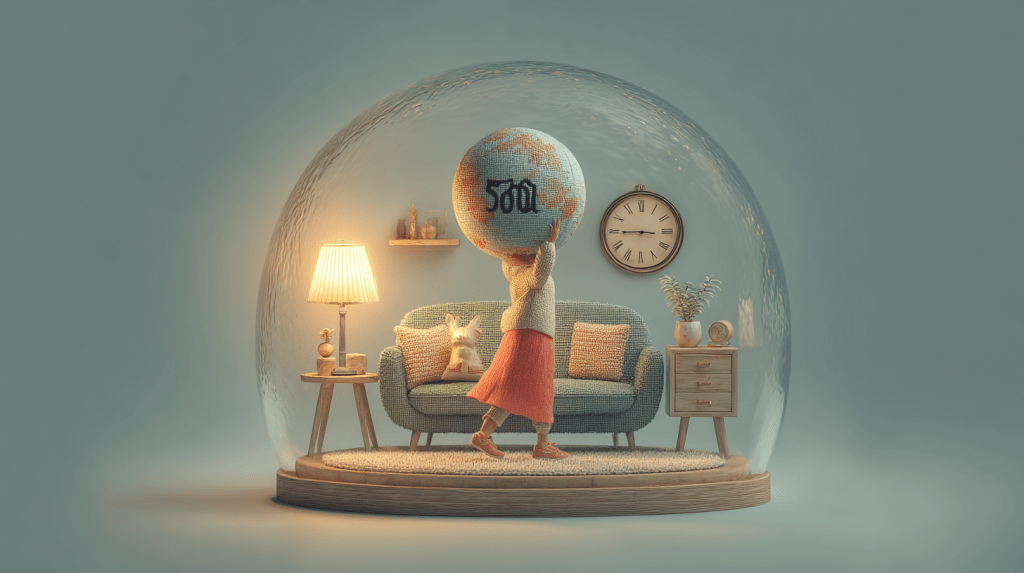
Nobody ever hands you a checklist for womanhood, but somehow it ends up shoved in your purse anyway. And it’s long as hell. Be the perfect daughter. The perfect mom. The perfect partner. Be loyal. Be patient. Don’t raise your voice. Don’t be “too much.” Smile when you’re exhausted. Pretend nothing’s wrong when you’re breaking inside. And God forbid you sit the fuck down for a minute — because then you’re lazy.
These expectations don’t always come with words. They come with side-eyes, with sighs, with the silence of people who never notice everything you’re carrying. They come with a culture that praises women for juggling ten plates but shames us the second one drops.
And here’s the part nobody wants to say out loud: it’s killing us. Slowly. Quietly. Stress stacked on stress until it carves itself into migraines, autoimmune flare-ups, chest pains, or that 3 a.m. panic that you’ll never catch up.
This isn’t just about gender roles or society being unfair (though it damn well is). This is about health. About the toll of swallowing expectations until they harden in your body. And until we name it, until we call out the weight for what it is, women will keep pretending we’re fine — while dying inside.
The Invisible Load
The fucked-up part about unspoken expectations is that nobody even has to say them out loud. You just know. You feel it. It’s the pile of invisible shit stacked on your back every damn day — the appointments you schedule, the birthdays you remember, the meals you plan, the tone you soften so nobody feels threatened. Half the time nobody thanks you, because they didn’t even ask you to do it. But let’s be real — if you didn’t, who would?
This “invisible load” isn’t written on paper. It’s written in side comments: “Wow, she always keeps it together.” It’s built into family routines where mom remembers every detail, while dad gets applauded for showing up. It seeps into workplaces where women do the emotional clean-up — smoothing egos, organizing the extra shit, making sure the team doesn’t implode. Culture calls it “natural” or “instinct,” but really, it’s unpaid, unrecognized labor that grinds you down until your body starts screaming.
Here’s the kicker: your body doesn’t separate emotional labor from physical labor. Stress is stress. Carrying this invisible load spikes cortisol, wrecks your sleep, and leaves you feeling like you’ve been hit by a truck — even if all you did was answer emails and pretend you’re not falling apart. And when you finally drag yourself to a doctor? They’ll call it “just being tired,” maybe suggest more rest, like you can put down the weight of an entire culture with a weekend nap.
The invisible load isn’t just about doing “more.” It’s about doing it all while acting like it costs you nothing. It’s being the default parent who remembers every damn doctor’s appointment, the coworker who smooths over tension at the office because nobody else will, the daughter who calls her mother even when her own body is running on fumes. And here’s the kicker — if you don’t do it, someone notices. If you do it, no one does. That’s how invisible it is.
It’s the thousand tiny calculations running in the background of a woman’s mind: Did I pack lunches? Did I respond to that email politely enough? Did I look approachable in that meeting or did I come off as “cold”? Did I give enough of myself to my kids today, to my partner, to my job — and when the fuck was the last time I gave something to myself?
Culture eats this up. Families normalize it. Workplaces quietly demand it. And women, taught to see this as “love” or “duty,” carry it until their bodies start screaming. Migraines that won’t quit. Periods that knock you flat. Anxiety that feels like heart attacks at 2 a.m. Doctors wave it off: You’re just tired. You’re stressed. No shit, doc. We’re bleeding stress from every pore and you’re calling it “just tired.”
Here’s the part that cuts deep: this isn’t accidental. Society runs on women’s unpaid, unnoticed labor. If every woman actually stopped carrying the invisible load tomorrow, the world would collapse before lunchtime. Kids wouldn’t make it to school. Offices would grind to a halt. Families would fracture. We’re the glue, but no one admits it because admitting it means admitting we’re being crushed.
And being crushed isn’t just a metaphor. Stress like this reprograms the body. Cortisol running wild, immune systems tanking, exhaustion becoming baseline. Women die younger, burn out faster, and still get told to smile while doing it. That’s the invisible load: the expectation that you’ll keep carrying what nobody else wants to touch, and the guarantee that when it breaks you, people will ask why you didn’t just “take better care of yourself.”
The Emotional Toll
Here’s the thing about carrying all those unspoken expectations: they don’t just eat up your time, they eat up your insides. You learn early on that “no” is a dirty word. That asking for help makes you weak. That resting means you’re slacking. And every time you ignore your body’s scream for rest, you pile another layer of guilt onto your chest.
That guilt grows teeth. It gnaws at you when you finally sit down for five minutes, whispering that you should be doing laundry, or answering that email, or packing tomorrow’s lunches. It’s not just pressure, it’s shame. Shame for daring to pause. Shame for not living up to some fantasy version of womanhood that nobody can reach but everyone pretends is real.
This is the perfection trap: If you juggle everything, you’re “amazing.” If you drop even one ball, you’re “failing.” And the sickest part? You don’t even need someone else to point it out anymore. You’ve internalized the critic so deeply that her voice sounds like your own.
And the body doesn’t lie. All that guilt and shame? They settle in your nervous system. Anxiety spikes. Depression creeps in. You start waking up at 3 a.m. with your heart pounding like you ran a marathon in your sleep. Migraines become “normal.” Insomnia stops being an occasional struggle and becomes your baseline. Your stomach twists itself into knots every time you try to swallow stress with a smile.
Doctors will say “it’s stress.” Like stress is a mosquito bite. Like it’s not a slow poison that rewires your brain, your gut, your immune system. Stress doesn’t just make you “tired.” Stress sickens you. Stress, wrapped in the pretty bow of expectations, is killing women by inches.
And yet — the world still claps for you when you smile through it.
Here’s the thing about carrying all those unspoken expectations: they don’t just eat up your time, they eat up your insides. You learn early on that “no” is a dirty word. That asking for help makes you weak. That resting means you’re slacking. And every time you ignore your body’s scream for rest, you pile another layer of guilt onto your chest.
That guilt grows teeth. It gnaws at you when you finally sit down for five minutes, whispering that you should be doing laundry, or answering that email, or packing tomorrow’s lunches. It’s not just pressure, it’s shame. Shame for daring to pause. Shame for not living up to some fantasy version of womanhood that nobody can reach but everyone pretends is real.
This is the perfection trap: If you juggle everything, you’re “amazing.” If you drop even one ball, you’re “failing.” And the sickest part? You don’t even need someone else to point it out anymore. You’ve internalized the critic so deeply that her voice sounds like your own.
And here’s where health comes in: your body treats shame and guilt the same way it treats danger. Your nervous system flips into fight-or-flight mode like you’re being chased by a damn tiger. Heart rate climbs. Blood pressure rises. Cortisol floods your system. In small bursts, that’s survivable. But when it’s every day, every week, every year? Your body starts breaking down.
Mood isn’t just “mental.” Chronic stress rewires your brain’s chemistry. Dopamine tanks — suddenly, nothing feels rewarding. Serotonin wobbles — so anxiety or depression show up, uninvited, but stubborn as hell. Your sleep cycle fractures because your brain can’t unclench at night, which means no deep rest, no real healing. Then your gut joins the rebellion: stress wrecks digestion, fueling IBS, acid reflux, bloating, even ulcers.
And the immune system? Constantly running in high-alert mode makes it sloppy. Sometimes it underreacts — hello, constant colds. Sometimes it overreacts — welcome, autoimmune flares. The same “be perfect” conditioning that society claps for is literally programming your body to self-destruct.
Yet the applause keeps coming. “Look how strong she is.” “She never complains.” As if silence is strength. As if being praised while your body quietly disintegrates is some kind of honor.
This is the emotional toll: invisible chains that don’t just weigh down your spirit but choke out your health. And most women don’t even realize they’re wearing them until the damage shows up in bloodwork, x-rays, or sleepless nights that blur into years.
And if you think it stops at stress headaches or restless nights — no. This shit goes way deeper.
When your body lives in survival mode, your hormones take the hit first. Cortisol — the stress hormone — becomes your new baseline, like a car engine stuck revving at redline. High cortisol messes with everything: your thyroid slows down (suddenly you’re exhausted, cold, maybe gaining weight for “no reason”), your estrogen and progesterone go off balance (hello, irregular cycles, brutal PMS, fertility struggles). For men, testosterone tanks, libido tanks, energy tanks. Stress doesn’t care what’s between your legs — it wrecks you either way.
Long-term, this “always on” cortisol drip is like acid on the body. It fuels high blood pressure, messes with blood sugar until prediabetes or full diabetes isn’t far off, and hardens arteries, setting you up for heart disease. Women who pride themselves on never resting? They often show up in ERs with heart attacks — because nobody told them that being the “strong one” can literally kill your heart muscle.
It doesn’t stop there. Chronic stress rewires genetics too. Not in the “sci-fi mutation” way, but in epigenetics — flipping switches on your DNA so that disease risks get passed down. That’s right: the weight of unspoken expectations can scar your body so deeply that your kids inherit the fallout in how their genes express. You swallowed the shame, but they might live with the autoimmune disease.
And let’s talk cancer. Elevated stress hormones and inflammation are a toxic duo. When your immune system is too busy putting out constant fires, it stops catching the real threats, like precancerous cells. Years of people-pleasing and “pushing through” can prime your body for the kind of illnesses nobody claps for.
This is the health toll that society packages as “strength.” We’re literally applauded while cortisol floods, dopamine crashes, estrogen swings wild, arteries stiffen, immune systems tank, and genetic legacies get warped. It’s not just burnout. It’s a slow-motion disease factory.
And yet women are told: “Smile more.” “Don’t complain.” “Be grateful.” As if gratitude will balance hormones. As if a smile will unclog arteries. As if silence will erase the damage encoded into DNA.
The Body Keeps the Score
Your body isn’t a vault. You don’t just shove stress in and lock it away. It leaks. It shows up in the way your shoulders are always tight, the tension headaches that won’t quit, the fatigue that sleep never fixes. It’s the knot in your stomach when you say yes but meant no. The jaw you clench so hard at night you wake up with cracked molars.
This isn’t “in your head.” It’s in your muscles, your nervous system, your immune system. Chronic stress literally rewires how your body operates. The sympathetic nervous system — fight, flight, freeze — becomes your default. Rest-and-digest never gets a turn. That’s why women juggling invisible labor often feel like their bodies are never at peace, even sitting still.
Research backs this up. Women under prolonged stress and unrelenting roles have higher rates of autoimmune diseases like lupus, rheumatoid arthritis, and multiple sclerosis. Why? Because when your immune system is always revved up by stress hormones, it eventually turns inward and attacks you. Burnout isn’t just emotional; it’s biological self-destruction.
Chronic fatigue syndrome and fibromyalgia? More common in women. Migraines? Women get them three times more often than men. Heart disease — the “silent killer” — is still the number one killer of women, and it doesn’t show up as Hollywood chest-clutching. It’s exhaustion, shortness of breath, nausea. Symptoms that get brushed off as stress, anxiety, “just being tired.”
The body keeps score, whether you’re ready to admit it or not. Every skipped meal, every forced smile, every sleepless night adds up. And eventually, it hands you the bill: in pain, in illness, in the kind of fatigue you can’t push through anymore.
You don’t age out of this stuff. The body doesn’t check a calendar and say, “Oh, she’s not in that situation anymore—delete.” Trauma stored at 8 can still twitch at 42. A slammed cabinet, the smell of bleach, someone glancing at the dust on your TV stand—your nervous system reads it like a siren. That’s what daily, gendered expectation does: it trains your body to brace.
From the jump, girls are taught the script: be tidy, be quiet, be helpful, be pleasing. Boys “help” and get applause. Girls are responsible and get judged. That difference burrows into tissues. It becomes hyper-vigilance: the way your brain scans a room for messes before you even sit down, the way your stomach drops when a guest knocks and the sink isn’t empty. You call it “standards.” Your body calls it threat.
Here’s how that long haul shows up—system by system:
- Nervous system: Living on edge wires you into sympathetic overdrive. Heart flutters, shallow breathing, sweaty palms for no obvious reason. The vagus nerve (your chill-out switch) loses tone, so “relax” feels like a foreign language. You fall asleep wired and wake up tired because your brain never got permission to power down.
- HPA axis (stress hormones): Chronic “be perfect” keeps cortisol high until it crashes. High? You’re jittery, sleepless, snappy. Low? You’re flattened, foggy, “lazy” (spoiler: you’re not). Cortisol tug-of-war scrambles estrogen/progesterone, so cycles get rough: PMS from hell, PMDD, worse cramps, heavier bleeding, perimenopause symptoms hitting like a freight train.
- Immune & inflammation: Stress asks your immune system to armor up. Armor is inflammation. In short bursts it’s helpful; on repeat it’s gasoline. Cue more flares if you’ve got autoimmunity (Hashimoto’s, RA, lupus), slower healing, weird rashes that “come out of nowhere,” and getting sick every time you finally stop.
- Gut: Fight-or-flight shuts down digestion. Hello IBS, reflux, bloat, nausea, diarrhea before the event you’re dreading. Microbiome balance tanks; you live on coffee and apology.
- Cardio & metabolic: Blood pressure creeps up. Cholesterol gets weird. Stress belly shows up even when you’re not overeating—insulin resistance doesn’t care about your salad. Women also get microvascular heart disease—less dramatic than a movie heart attack, more likely to be dismissed. The symptom? Breathless, wiped, “must be anxiety.”
- Pain & muscle: Clenched jaw (TMJ), tension headaches, frozen neck, locked pelvic floor, low back that seizes the second you try to rest. Central sensitization turns pain volume up; now everything aches and doctors call it mysterious.
- Thyroid & energy: The gland that sets your body’s “speed” hates chronic stress. You get cold. Hair sheds. Thoughts slog through molasses. Labs might look “normal” while you feel anything but.
- Reproductive & libido: When your body thinks the world isn’t safe, sex is the first thing to go. Desire disappears, arousal is glitchy, penetration hurts because muscles never unguard. Fertility can take the hit too—not because you’re “too old,” but because your system has been red-lining for years.
- Skin & hair: Eczema, acne along the jawline, weird hives. Your skin is a billboard for your nervous system.
Now put it in a day you know. The living room’s a mess. A guest texts “be there in 10.” Your chest tightens, heat rises, jaw locks. Cortisol spikes, blood shunts from your gut to your limbs, and you’re power-cleaning while light-headed. You skip lunch (again), snap at a kid who just wanted a hug, and later hate yourself for both the mess and the snap. That shame spiral is its own stressor. Tonight you’ll lie in bed, body buzzing, brain inventorying every failure. That’s not personality—it’s physiology trained by expectation.
And it’s not only external pressure. Internalized rules—hand-me-downs from mothers, aunties, culture—keep the system running even when no one’s watching. That’s why you can leave the marriage, quit the job, move states…and still feel your stomach drop when the sink isn’t empty. Your body learned to survive by over-delivering. It needs new instructions, not more proof you’re “failing.”
One more hard truth: this isn’t just about “stress management.” It’s about load. You can’t box-breathe your way out of carrying three people’s worth of labor. Boundaries, redistribution at home and work, saying no, letting “good enough” be enough—that’s medical care too. Because until the weight changes, your body keeps paying, cell by cell.
Bottom line: the unpaid, unspoken job description women inherit isn’t just unfair—it’s unsafe. The symptoms aren’t random. They’re receipts. And your body, inconveniently honest as ever, will keep printing them until something—expectations, habits, support—actually changes.
Breaking the Silence
The hardest part isn’t admitting you’re tired. It’s admitting you’re tired of carrying everyone else’s shit. Because the second you say it out loud, people look at you like you’ve just dropped the holy grail. “What do you mean you can’t handle it? Isn’t that what women do?”
Here’s the truth: silence has been killing us, one stress-fractured rib at a time. And breaking it isn’t about suddenly becoming some glowing goddess of “self-care.” It’s messy. It’s awkward. It sounds like a whisper at first: I can’t do this anymore. It looks like saying “no” and shaking while you do it. It feels like guilt, heavy in your gut, because you’ve been taught that boundaries are betrayal.
But here’s the shift: women are starting to call bullshit. In therapy rooms where we finally say, “I’m not broken—this system is.” In group chats where moms admit they didn’t cook dinner, they ordered pizza, and nobody died. In movements online where women post about rest not as laziness but as rebellion. In circles of friends who check in with, “Have you eaten? Have you slept? Do you need me to come over so you can?”
Health isn’t just spinach smoothies and 10,000 steps. Health is learning to draw a damn line. To look at your boss and say, “This is too much.” To tell your partner, “I need help.” To tell your mother, “No, I’m not coming over every Sunday.” That’s not selfish. That’s survival.
Science backs it: people who set boundaries have lower cortisol levels, fewer stress-related flare-ups, better sleep, and healthier immune responses. Rest isn’t indulgence—it’s medicine. Saying no literally rewires your nervous system, tells your body the threat has passed, that it’s safe to stand down.
Breaking silence is also about inheritance. Because every time you say, “I won’t keep living like this,” you rewrite the script your daughters will inherit. They won’t learn that exhaustion equals worth. They’ll learn that joy and health are worth protecting.
So yeah, people will side-eye you when you leave dishes in the sink and go lay down. Let them. Every no, every pause, every refusal to meet impossible expectations is a radical kind of health care. One that doesn’t come in a prescription bottle, but in your own damn voice.
A Different Way Forward
So here’s the question that lingers after all the noise: what expectations are you carrying right now that nobody asked you to carry—but you still do?
The truth is, most of us don’t even know anymore. The weight’s been there so long it feels like bone. But bones can break, and they do. Which means we have to start asking the unthinkable: What if I just stopped? What if success wasn’t grinding ourselves into dust to prove we’re worthy? What if it was balance? What if it was health? What if it was trusting ourselves enough to say, “I don’t need to prove a damn thing”?
This isn’t about becoming perfect at boundaries, or suddenly living some zen-ass life where you meditate at sunrise and drink kale juice. It’s about learning to pause before you collapse. It’s about choosing your body before you choose their comfort. It’s about daring to believe that your worth isn’t tied to endless productivity but to the fact that you’re here, alive, breathing, worthy.
Because the truth is, no one builds statues for the women who quietly killed themselves trying to keep everyone else happy. But generations can be changed by the ones who said, enough.
So, here’s the line I want you to carry forward: Your worth is not in how much you carry, but in how fully you live.
✦ Tools for Lighter Shoulders
If this piece cracked something open for you, don’t just close the tab and keep moving. Carry something different out of it—something that actually helps. These aren’t “quick fixes” (because we’re done pretending those exist). They’re real books, reads, and watchables that dig into the invisible load and the health cost of carrying too much.
Lifelines & Learning: Real Resources for Real Healing
Need Help, Not Just Hope? (Go-To Websites & Hotlines)
- SAMHSA (U.S.) – 24/7 crisis and treatment support. Call or text 988 for suicide/crisis help; 1‑800‑662‑HELP for mental health referrals.
- CDC Mental Health Support Hub – Access suicide lines, domestic violence help, LGBTQ+ resources, and maternal mental health support.
- MentalHealth.gov / NAMI / ADAA – Trusted directories for therapists, peer support, educational tools tailored for women, communities, and clinicians.
- Seleni Institute – U.S.-based nonprofit specializing in women’s reproductive and maternal mental health support (perinatal, menopause, fertility).
- Active Minds – Peer-to-peer mental health advocacy and support network, mostly on college campuses and workplaces.
Articles & Research Worth Your Time
- The Invisible Load of Motherhood – NYT feature that makes you feel seen if you’ve ever done all the unseen shit nobody thanks you for.
- How Chronic Stress Affects Women’s Health – From the American Psychological Association, laying out the cold hard facts.
- Autoimmune Diseases and Women – U.S. Dept. of Health breakdown on why women’s bodies are more likely to attack themselves under relentless stress.
Fuel for the Mind (Books & Media That Hit Different)
- Books:
- The Body Keeps the Score – A deep dive into how trauma and stress leave imprints on the body.
- Burnout: The Secret to Unlocking the Stress Cycle – Twins Emily & Amelia Nagoski unpack how women can reclaim health from relentless pressure.
- The Body Keeps the Score – A deep dive into how trauma and stress leave imprints on the body.
- Documentary to Watch:
- Miss Representation – A fiery breakdown of how cultural expectations crush women’s identities and health.
- Miss Representation – A fiery breakdown of how cultural expectations crush women’s identities and health.
At its core, the weight of unspoken expectations is not just a cultural problem — it’s a health one. Every demand left unsaid, every role assumed without recognition, leaves its mark on the body and mind. But every boundary set, every voice raised, every act of rest, becomes a form of healing. May this piece serve as a reminder: your health matters more than anyone’s checklist.
With grace, grit, and a love that refuses to quit.
Keep showing up—even when it feels like no one’s watching.
Your presence is powerful. Your love is building something they’ll one day thank you for.
From one woman carrying too much to another—
With strength and softness,
~ JBE Mindful Pathways
Wellness Advocate | Writer | Mother | Still Learning, Always Loving
“Explore more empowering stories like this in the Unspoken Health Kalendar collection—where overlooked truths find a voice, and healing begins with awareness.”

 livingmagicwithjuju
Leave a comment